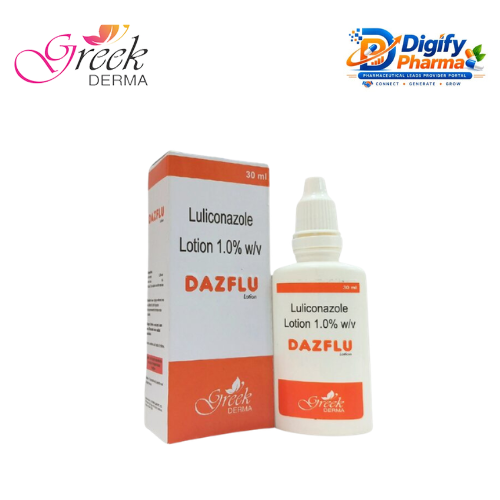
Dazflu Lotion contains luliconazole 1.0% w/v, a topical antifungal agent used in treating susceptible fungal skin infections. The formulation helps inhibit fungal growth and supports relief from infection-related itching, redness, and scaling. Its lotion form allows convenient application to affected skin areas. Dazflu should be used according to medical advice and for the prescribed treatment period.
Prices are indicative and set by the listing company. Confirm net rates, packing and stock availability directly with the supplier.

Greek Derma is an Indian dermatology and skincare pharmaceutical company established in 2015, based in Panchkula, Haryana.
Key Details
• Core Focus: Specialized exclusively in dermatology, cosmetology, skincare, hair care, baby care, and specialized R&D for conditions like acne, fungal infections, psoriasis, and dermatitis—rather than general pharmaceuticals.
• Product Range: Includes prescription and OTC products such as creams, gels, lotions, face washes, serums, shampoos, sunscreens (e.g., Sunvera, Daz'n Care), soaps, ointments, tablets, and capsules.
• Business Model: Operates on a Propaganda Cum Distribution (PCD) Pharma Franchise model, offering WHO-GMP-certified manufacturing, territory-based monopoly rights, and promotional marketing support across India.
• Etymology (Literal Meaning): The word derma comes from the ancient Greek word dérma, which directly translates to "skin".